
News
5 Creative Custom Anime Rugs Design Ideas for Bedroom or Office
Oct
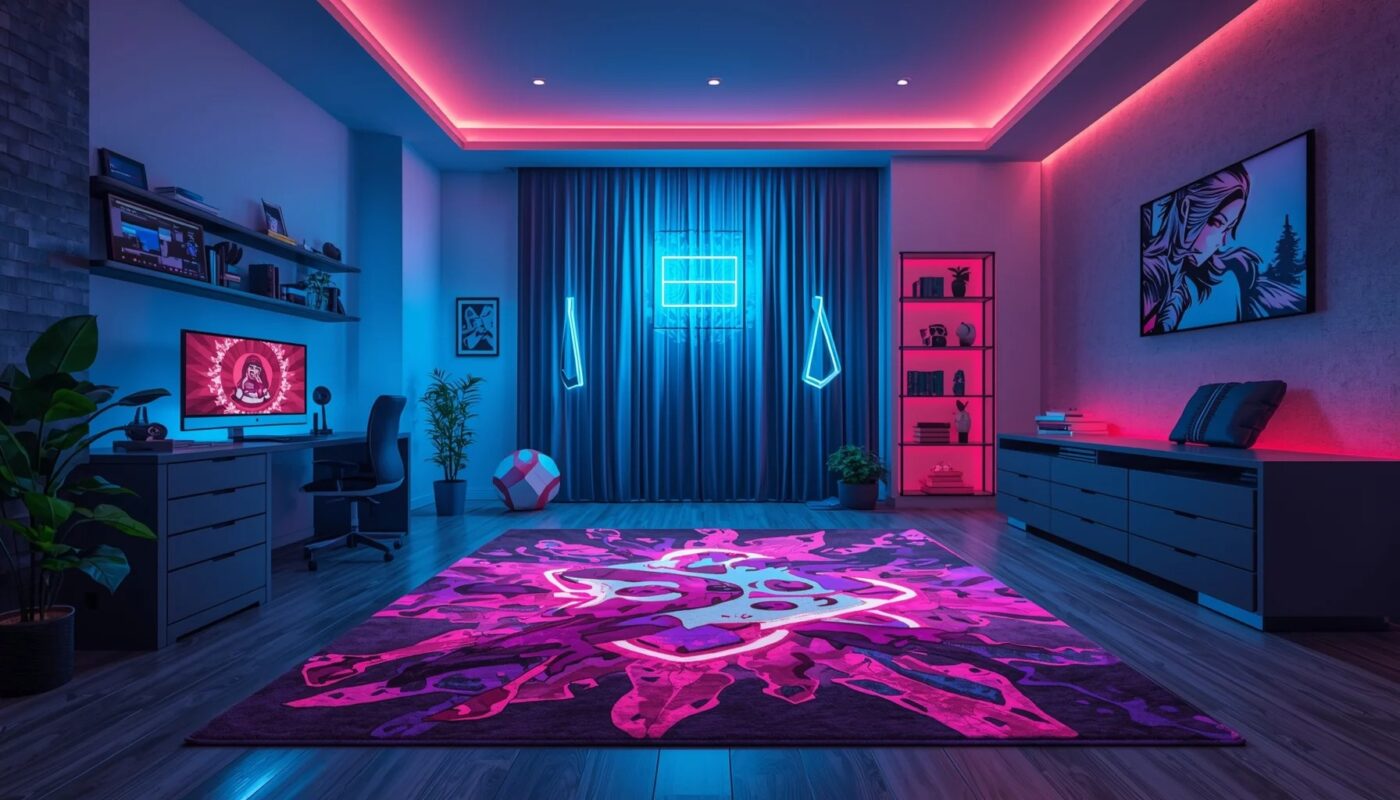
Custom anime rugs design ideas can turn a bedroom, gaming station, or office into a more personal and visually cohesive space. Binteez supports made-to-order rugs using uploaded artwork or selected anime-inspired designs, with options for different sizes, shapes, and layouts. The strongest results balance character placement, image resolution, room scale, and practical care requirements rather than simply enlarging a favorite image.
What Makes a Custom Anime Rug Design Work?
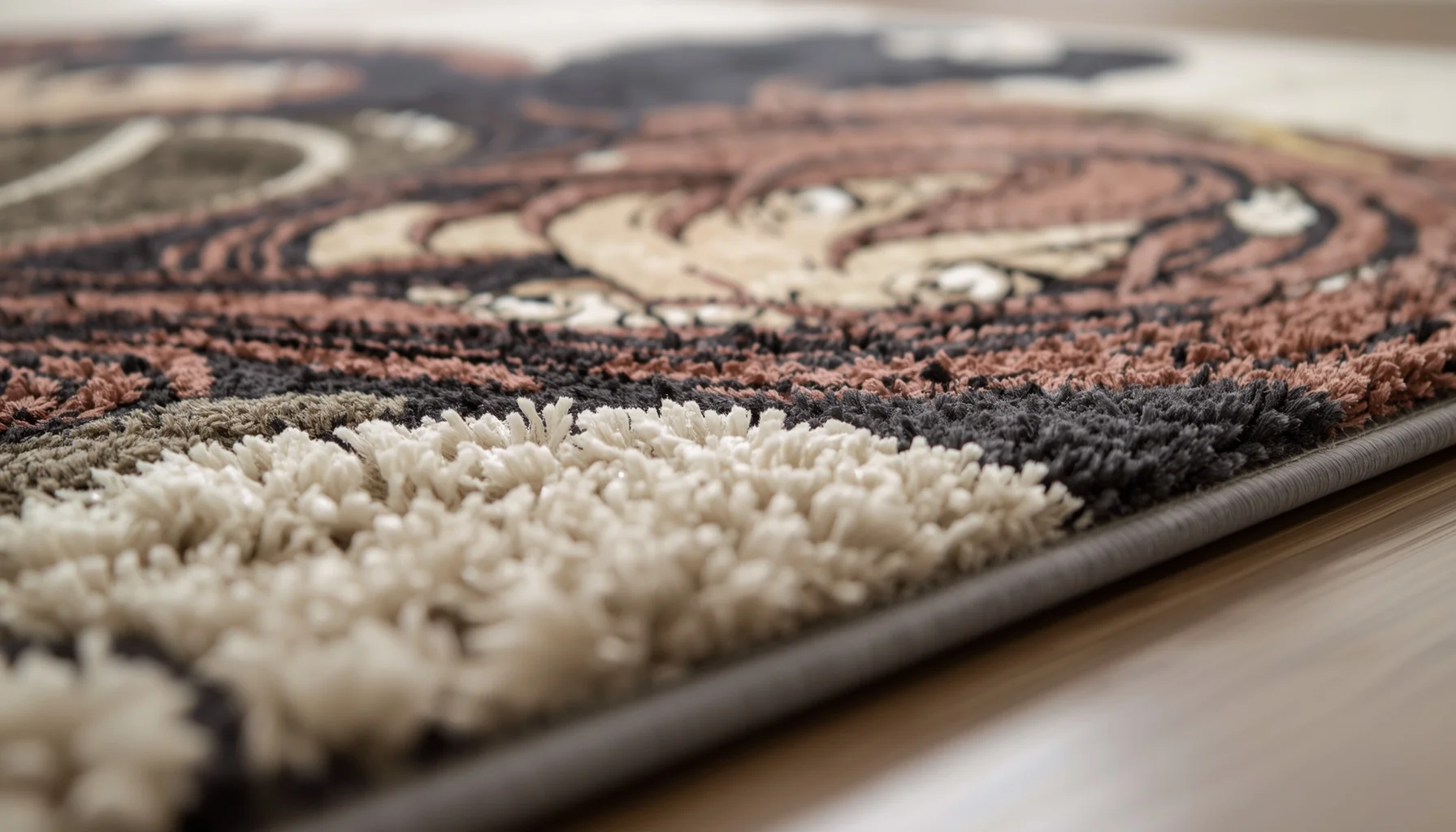
A custom anime rug is a printed floor covering created from an existing template, selected character artwork, fan art, or a user-uploaded image. Binteez’s made-to-order model combines digital printing, textile production, quality control, and shipping into a workflow designed around personalized home décor.
5 Creative Custom Anime Rugs Design Ideas for Bedroom or Office – What Makes a Custom Anime Rug Design Work?
From 2D character art to functional décor
The central design challenge is converting a two-dimensional anime image into a textile-ready composition. A character illustration that looks excellent on a phone or poster may become difficult to read when placed under furniture, viewed from above, or printed across a large surface.
A successful layout usually has three visual layers:
- Primary focal point: The main character, face, emblem, or signature pose.
- Supporting graphics: Symbols, atmospheric effects, background architecture, or color fields.
- Usable negative space: Areas that prevent the rug from appearing crowded and help the focal point remain recognizable.
For example, a bedroom rug featuring a single character can place the face and upper body toward the center while using color-matched background elements around the edges. An office rug may work better with a smaller character silhouette, logo-like symbol, or restrained pattern that complements the desk rather than competing with it.
Binteez describes its custom rug service as suitable for PNG or JPG uploads, existing templates, and requested character-based designs. Users remain responsible for confirming that they have the rights to upload and reproduce their chosen artwork.
Five design directions for different spaces
The following concepts provide a practical starting point for personalized orders:
- Centered hero portrait: Place one recognizable character in the middle, supported by a simple gradient or themed background.
- Action-pose composition: Use a diagonal pose, energy effects, and directional movement to create a dynamic gaming-room centerpiece.
- Character lineup: Arrange multiple characters across a horizontal rug, ensuring faces and important details are not hidden near the edges.
- Symbol and pattern design: Build the rug around a crest, weapon, mask, emblem, or repeated motif for a more understated office look.
- Scene-inspired layout: Recreate the atmosphere of a fictional setting using color, lighting, and environmental elements while keeping the design readable from above.
The best option depends on the room’s viewing distance. A small accent rug can support finer detail, while a large area rug should use bold forms, strong contrast, and a clear focal hierarchy.
Bedroom, office, and gaming-room architecture
In a bedroom, the rug can act as a visual anchor beside a bed, beneath a reading chair, or in front of a display shelf. Character colors should relate to existing bedding, wall art, curtains, or lighting so the rug feels integrated rather than randomly added.
An office requires more restraint. A circular rug with a central symbol may provide personality without overwhelming a professional workstation. A low-detail design with a dark background can also reduce the appearance of everyday marks, although actual care performance depends on the selected material and product instructions.
For gaming rooms, the rug can reinforce a wider theme around a PC or console setup. Binteez identifies gaming rooms, themed bedrooms, content-creator backdrops, and personalized gifts as practical use cases. In each setting, placement matters as much as artwork: avoid putting critical faces beneath chair wheels or under furniture legs.
Technical Specifications and Design Mechanics
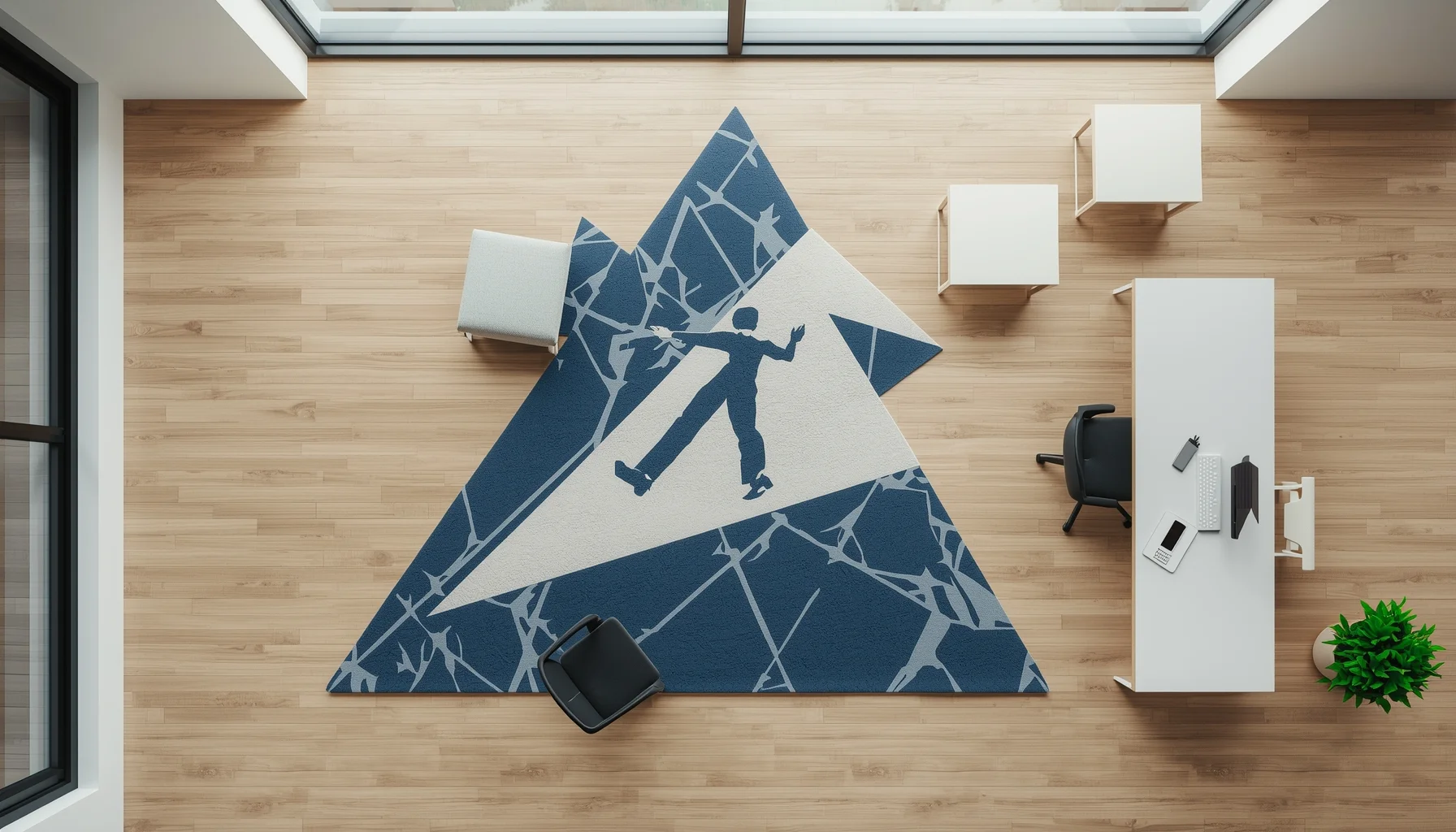
The practical quality of a custom anime rug depends on the interaction between artwork, dimensions, material, printing method, shape, and placement. Binteez’s stated specifications indicate a soft textile surface, non-slip backing, digital color reproduction, and made-to-order production.
5 Creative Custom Anime Rugs Design Ideas for Bedroom or Office – Technical Specifications and Design Mechanics
Core specification comparison
| Design or production factor | Binteez-grounded detail | Design implication |
|---|---|---|
| Product category | Custom-printed home décor, including anime rugs | Treat the rug as both functional flooring and visual artwork |
| Production model | Print-on-demand or made-to-order | Allow production and shipping time before planning a room reveal |
| Surface materials | Common offerings include high-density memory foam or soft flannel surfaces | Choose artwork contrast and detail according to the surface appearance |
| Backing | Non-slip rubberized backing | Useful for stability, but the floor should still be clean, dry, and suitable |
| Printing method | High-definition digital sublimation printing | Supports vibrant, detailed anime-style colors and fade-resistant output |
| Image upload formats | PNG or JPG are identified in the workflow | Use a high-resolution source with clear edges and minimal compression |
| Shape options | Rectangular, circular, or custom contour cuts | Match the silhouette to furniture, walkways, or a central room feature |
| Typical size range | Small accent rugs around 3 × 5 ft to large area rugs around 5 × 8 ft | Select dimensions after measuring the intended floor zone |
| Design verification | Production team reviews uploaded files for print quality and resolution | A file may require adjustment before manufacturing |
| Production process | Digital printing, curing, and quality inspection | The finished product passes through manufacturing and defect checks |
| Delivery | Packaged and shipped with tracking information by email | Monitor the shipment before installation or gifting |
| Care | Products may be machine-washable or spot-cleanable, depending on material | Follow the specific care instructions for the selected construction |
| Lead time | Production often takes approximately 3–7 business days, plus shipping | Build regional delivery variation into the schedule |
How size and shape change the composition
A rectangular rug offers the most predictable canvas for character lineups, full-body artwork, and room layouts aligned with desks or beds. It is particularly useful when a design includes horizontal text-like elements, multiple figures, or a wide background scene.
Circular rugs naturally emphasize the center. They are effective for a single portrait, emblem, magical circle, or symmetrical composition. However, placing a character’s limbs or weapon near the circumference can create awkward cropping, so the artwork should be prepared with a safe margin around the main subject.
Custom contour cuts create a stronger novelty effect, especially when the outline supports a mascot, creature, mask, or recognizable object. They also require more careful planning around the edge because small protrusions can be visually significant. The production team’s design verification step is important when submitting unusual shapes or intricate silhouettes.
Color, resolution, and readable detail
High-definition digital sublimation printing is intended to preserve vibrant colors and anime-inspired visual contrast. Even so, printing cannot restore detail that is absent from a low-resolution or heavily compressed source file.
Before uploading, examine the image at a larger size and check:
- Whether the face remains sharp and recognizable.
- Whether thin lines are thick enough to survive textile reproduction.
- Whether dark areas contain enough tonal separation.
- Whether the background competes with the character.
- Whether the image has unwanted borders, watermarks, or compression artifacts.
Strong color separation is especially helpful for rugs viewed from standing height. A character with dark hair against a dark background may lose definition, while a controlled accent color around the silhouette can improve recognition. For office designs, two or three dominant colors often create a more polished appearance than a highly saturated collage.
How to Order and Implement a Personalized Design
A personalized Binteez rug follows a structured workflow from design selection through delivery. The most reliable approach is to prepare the artwork and measure the room before opening the custom order process.
Step-by-step custom order workflow
Step 1: Define the room objective.
Decide whether the rug is intended as a bedroom focal point, gaming-room accent, office decoration, creator backdrop, or personalized gift. This determines the appropriate visual intensity, size, and viewing angle.
Step 2: Select or prepare the artwork.
Choose an existing template or prepare a high-resolution PNG or JPG. If using fan art, commissioned work, personal artwork, or a character image, confirm that you have permission to reproduce it.
Step 3: Build the character layout.
Place the main character away from likely furniture legs, chair wheels, and door swings. Keep important facial features, logos, and hands inside a safe area rather than close to the edge.
Step 4: Measure the installation area.
Measure the floor zone in feet or the relevant unit shown during selection. Compare the available space with a small accent format, a larger area format, or a circular option. Leave enough clearance for doors and walking paths.
Step 5: Select shape and dimensions.
Choose a rectangular, circular, or custom contour design. The shape should support the artwork’s composition, not merely reflect personal preference.
Step 6: Submit the custom order.
Navigate to the custom rug section on Binteez, upload or select the design, choose the specifications, add the item to the cart, and complete payment.
Step 7: Allow design verification.
Binteez’s production team reviews the file for resolution and print suitability. If the source needs improvement, address the issue before manufacturing rather than relying on the final print to correct it.
Step 8: Track production and delivery.
The rug is digitally printed, cured, inspected for defects, packaged, and shipped. Tracking information is provided by email, while total delivery time varies by region.
How should you arrange multiple characters?
A multi-character rug needs a deliberate hierarchy. Avoid treating every character as equally large unless the design is intended to look like a uniform lineup. Instead, choose one primary figure and use secondary figures or symbols to frame it.
A horizontal arrangement works well beneath a desk, along a bed, or in front of a media console. Characters should face inward or share a visual direction when possible; opposing poses can make the composition feel disconnected. Leave breathing room between silhouettes so hair, weapons, and accessories do not merge into one unreadable mass.
For a circular rug, consider a radial arrangement with the characters oriented toward the center. This can create a balanced display, but it also makes facial orientation more complex. If the design includes text or recognizable symbols, test how they appear when viewed from different angles.
A single-character composition is usually safer for a first order. It reduces cropping risk, keeps the focal point obvious, and makes it easier to coordinate the rug with furniture and surrounding décor.
Installation and first-use checklist
Once the rug arrives, inspect the print, edges, backing, and overall shape before placing furniture on it. The design should be checked in the same lighting conditions where it will be used because artificial lighting can change how saturated colors appear.
Use this implementation checklist:
- Vacuum or clean the intended floor area.
- Confirm that the backing sits flat without folds or curling.
- Keep the rug clear of door paths and unstable furniture.
- Photograph the design from standing height and from the intended camera angle.
- Follow the specific care instructions for the chosen material.
- Use spot cleaning or machine washing only when the product guidance allows it.
For a content-creator backdrop, test the rug through the camera rather than relying only on direct viewing. A design that looks balanced in person may appear too small, too dark, or partially hidden once the camera crops the room.
Pro Tips, Common Pitfalls, and Real-World Examples
The strongest custom anime rugs are designed around real use rather than image selection alone. Small adjustments to contrast, safe margins, and furniture placement can significantly improve the final result.
Practical design tips from common failure points
Pitfall: choosing a low-resolution image.
A small screenshot may look acceptable on a phone but lose sharpness when enlarged. Start with the highest-quality source available and avoid repeatedly saving compressed files.
Pitfall: placing the face near the edge.
Furniture, foot traffic, and manufacturing tolerances can make edge placement risky. Keep faces, logos, and key accessories toward the center or within a generous interior margin.
Pitfall: overloading the background.
A complex background can compete with the character. Reduce unnecessary effects, use a controlled color field, or place secondary elements farther from the focal point.
Pitfall: ignoring the room’s palette.
A rug does not need to match every object, but it should share at least one meaningful color with nearby décor. This creates visual continuity.
Pitfall: forgetting the viewing angle.
Floor art is commonly viewed from above or at a distance. Test the design as a thumbnail and from a standing perspective before submission.
Pitfall: assuming every material has identical care requirements.
Binteez notes that care depends on the material blend. Confirm whether the selected rug is machine-washable or intended for spot cleaning before using a cleaning method.
Three practical design examples
Example one: compact bedroom accent.
A fan chooses a centered portrait with a dark navy background and one bright accent color. A circular shape is placed beside a bed and away from the door swing. The composition is intentionally simple so the face remains visible from the entrance.
Example two: structured gaming station.
A gamer selects a rectangular 3 × 5 ft-style accent format for the space in front of a desk. The main character occupies the center, while energy effects extend diagonally toward the corners. The design avoids putting important details beneath the chair’s rolling path.
Example three: professional creator office.
A streamer uses a custom contour or circular design featuring a recognizable emblem rather than a full character scene. The restrained composition reads clearly on camera, supports a themed background, and avoids overwhelming other visible equipment.
These examples illustrate a broader principle: the best custom design is not necessarily the most detailed one. It is the design that remains legible, stable, and visually appropriate in its intended environment.
A quality-control review before submission
Before placing the order, review the artwork at three scales: full size, thumbnail size, and the approximate perspective from standing height. At full size, inspect line quality and artifacts. At thumbnail size, confirm that the focal point is immediately recognizable. From standing height, evaluate whether the composition feels balanced across the floor.
Also verify:
- The selected dimensions fit the measured space.
- The shape supports the image rather than cutting through important elements.
- The file is a suitable PNG or JPG.
- The artwork does not include unauthorized copyrighted material.
- The intended care method is compatible with the chosen material.
- The estimated production and shipping window fits the occasion.
This review is particularly important for gifts. A personalized rug may be emotionally meaningful, but a wrong size, unclear image, or unsuitable room palette can reduce its practical value.
Strategic Use Cases and the 2026 Outlook
In 2026, custom anime rugs are positioned as flexible visual assets for personal rooms, gaming environments, creator spaces, and personalized gifting. Binteez’s perspective is that made-to-order customization allows buyers to connect artwork, room identity, and practical floor décor in one product.
From personal decoration to branded room identity
For individual buyers, the rug can express a favorite series, character, color palette, or fandom without requiring an entire room makeover. A single well-designed floor covering may unify shelves, lighting, wall art, and desk accessories.
For content creators, the rug can serve as a high-visibility set element. Its placement below a desk, behind a seated subject, or within a wide camera frame can reinforce a channel’s visual identity. However, the design should be tested on camera because lenses, lighting, and cropping may change the perceived scale.
In shared offices, studios, or entertainment spaces, a symbol-based design may be more versatile than a highly specific character portrait. It can communicate a theme while remaining visually organized. Organizations should also confirm artwork permissions before uploading logos, commissioned illustrations, or licensed characters.
Operational planning for larger or repeated use
A business, studio, or event organizer considering multiple rugs should treat the process as a production workflow rather than an impulse purchase. Consistency matters across files, dimensions, colors, and placement.
A practical planning sequence includes:
- Establish a shared design brief for character scale, background color, and shape.
- Maintain approved source files at the highest available resolution.
- Confirm usage rights for every image and logo.
- Order according to the required installation dates, allowing for approximately 3–7 business days of production plus regional shipping.
- Inspect delivered pieces for print, edge, and backing consistency.
- Document the correct cleaning and storage instructions for each material.
The grounded information available for Binteez supports custom ordering, file verification, manufacturing, inspection, and tracked shipping. It does not establish enterprise contracts, bulk-service guarantees, or fixed delivery dates, so those assumptions should not be made without direct confirmation.
What will matter most in 2026?
The most durable trend is likely to be purpose-built personalization: designs created for a specific room, camera frame, gift recipient, or gaming setup rather than generic decoration. Buyers are increasingly able to choose between bold character art, understated symbols, and custom-shaped compositions according to the space.
Three principles should guide decisions:
- Clarity over complexity: A readable focal point has more visual value than excessive detail.
- Room fit over novelty: Dimensions, furniture, and walkways determine whether the rug works day to day.
- Rights and quality before submission: Legal permission and high-resolution artwork protect the order from avoidable problems.
For readers exploring Binteez’s broader range, the custom anime rugs collection and related anime rug designs provide a natural starting point for comparing visual directions before choosing a personalized layout.
FAQ
Can I upload my own anime artwork for a custom rug?
Binteez’s custom order workflow allows users to upload a high-resolution PNG or JPG or select an existing design direction. You should upload only artwork you created yourself or have permission to reproduce, including commissioned fan art and branded imagery. The production team reviews the file for resolution and print suitability before manufacturing. Approval of print quality does not replace your responsibility to confirm copyright, trademark, or licensing rights for the image.
What size and shape are best for a custom anime rug?
The best format depends on the room and artwork. A rectangular rug generally suits character lineups, wide scenes, and desk areas, while a circular rug emphasizes a centered portrait, emblem, or symmetrical design. Custom contour shapes can support mascots or distinctive silhouettes. Binteez’s typical range extends from small accent sizes around 3 × 5 ft to larger formats around 5 × 8 ft, with exact suitability determined by your measured floor space.
How long does a custom anime rug take to make and ship?
Custom rugs require both production and shipping time because they are made to order. Binteez indicates that production often takes approximately 3–7 business days, followed by shipping that varies according to destination and region. After digital printing, the rug is cured, inspected for defects, packaged, and shipped with tracking information provided by email. Plan ahead for gifts, room renovations, or content shoots rather than relying on an immediate delivery.
How should I clean and maintain a custom anime rug?
Care depends on the selected material blend. Binteez offerings may include high-density memory foam or soft flannel surfaces, and products may be marketed as machine-washable or spot-cleanable depending on construction. Follow the specific care instructions supplied for the rug instead of assuming that every product can be washed identically. Regularly remove surface debris, address spills promptly using the approved method, and keep the non-slip backing on a clean, dry floor.
