
News
The Rise of Custom Anime Rugs in Modern Otaku Culture and Home Decor
Oct
Custom anime rugs market growth 2024 reflects a wider shift: anime-inspired interiors are moving from niche fan spaces into mainstream personal decor. The figures supplied for this trend point to a 15–20% year-over-year rise in searches for custom anime rugs and typical prices of $150–$450 for quality handmade pieces. These are not independently verified breaking-news figures, however, and the available information does not establish a specific event from the last 24 hours.
What the 2024 market signals—and what the numbers can prove
Custom anime rugs sit at the intersection of licensed entertainment, personal expression and home furnishing. The supplied estimates suggest rising consumer interest, but without transparent platform data or a named research methodology, they should be treated as directional indicators rather than audited market measurements.
The Rise of Custom Anime Rugs in Modern Otaku Culture and Home Decor – What the 2024 market signals—and what the numbers can prove
A search increase is a signal, not a sales report
The reported 15–20% increase in searches for “custom anime rugs” compared with 2023 suggests that more shoppers are exploring the category. It does not, by itself, show how many rugs were purchased, what sellers earned, or whether interest is sustained across regions and platforms. Search growth can reflect curiosity, seasonal attention or a popular series drawing new fans to related products.
That distinction matters for readers comparing the category with broader anime-industry figures. The supplied background cites business reporting that valued the global anime industry at more than $28 billion in 2023 and notes its expansion into merchandise. That larger figure offers context for anime’s commercial reach; it is not a valuation of the rug market. A small decor niche can benefit from a large cultural ecosystem without being large enough to measure reliably on its own.
Why a “last 24 hours” claim needs verification
The information provided for this analysis does not identify a dated announcement, a new study published in the last 24 hours, or a specific outlet report about custom rugs. It therefore cannot substantiate a breaking-news event. The 2024 figures and Q3–Q4 forecast are best understood as trend inputs, not fresh news.
Bloomberg and Reuters are named as relevant business-press sources for the broader anime industry, while VnExpress and Tuổi Trẻ are identified as outlets covering personalized living spaces among younger consumers. Business of Fashion is cited for analysis of pop culture’s relationship with design. These references help define the reporting landscape, but no article titles, links or publication dates were supplied to verify particular claims. Readers should avoid repeating them as direct quotations or as newly published findings.
A practical reading of the available figures
The price range of $150–$450 is presented as an average for high-quality custom rugs, with size and design complexity affecting the final amount. It is useful as an initial planning range, not a guaranteed quote or a universal market price. A buyer should compare the specifications behind each estimate: dimensions, fiber, construction, finishing and design detail.
| Market indicator | Figure or timing supplied | How to interpret it |
|---|---|---|
| Search interest for custom anime rugs | 15–20% higher year over year versus 2023 | Directional demand signal; platform methodology and sales conversion are unspecified |
| Typical price for a quality custom rug | $150–$450 | Indicative range; size and design complexity affect cost |
| Broader anime industry value | More than $28 billion in 2023 | Context for the wider industry, not the rug segment |
| Suggested seasonal peak | Q3 and Q4 2024 | Forecast tied to holiday shopping and anime releases, not a verified outcome |
| Product preference described | Handmade tufted and customized designs | Reported trend; no market-share data supplied |
Why anime decor is moving into everyday rooms
Anime rugs are gaining attention because they can serve both as functional floor coverings and as visible statements of taste. Streaming exposure, the social life of fandom and the desire to personalize home work and entertainment spaces all help explain the appeal.
The Rise of Custom Anime Rugs in Modern Otaku Culture and Home Decor – Why anime decor is moving into everyday rooms
Streaming turns a story into a shared visual language
The supplied market background points to Netflix and Crunchyroll, alongside franchises such as Demon Slayer, Jujutsu Kaisen and One Piece, as drivers of interest in personalized spaces. Streaming makes series easier to discover and discuss across fan communities. When a character, emblem or visual motif becomes familiar, it can also become a candidate for room decor.
That does not mean every fan wants a large, literal character image. Some buyers may prefer a recognizable symbol, a restrained palette or a design that fits an existing room. The commercial opportunity lies partly in making fan identity legible without forcing the entire space to look like a themed retail display. For shoppers, the useful question is not only “Which series do I like?” but “Which image will I still want to live with when the current release cycle changes?”
The bedroom, studio and gaming room have different needs
A rug’s best design depends on where it will be used. A bedroom may suit a smaller, softer visual accent near a bed or desk. A gaming or streaming room may call for a more prominent graphic that reads clearly in photographs or video. A shared living area may benefit from a color scheme that references a series without dominating the room.
For people searching “best custom anime rugs for gaming room 2024,” the practical priority is placement. Consider whether the rug will sit in the camera frame, whether furniture will cover its central design, and whether foot traffic makes a delicate or light-colored surface impractical. These are not niche styling concerns: they determine whether the piece functions as decor or becomes an expensive image hidden under a chair.
Personal branding at home is the bigger story
A custom rug can act as a form of personal branding: it communicates interests to visitors and gives a room a focal point. That is especially relevant in spaces used for gaming, streaming, studying or social posts, where the background itself becomes part of how someone presents their identity.
The supplied context also points to reporting by VnExpress and Tuổi Trẻ on younger Vietnamese consumers personalizing work and entertainment spaces. Without specific article details, this should be treated as a relevant editorial theme, not a quantified claim about all Gen Z buyers. Still, the broader behavior is easy to understand: when people spend time in a room, they often want it to feel distinctly theirs. An anime rug makes that preference tangible while remaining a usable home object.
Handmade tufted rugs versus printed designs
The choice between a handmade tufted rug and a printed one is a trade-off among texture, customization, cost and visual detail. The supplied trend notes describe increasing preference for handmade tufted pieces, but buyers should assess the actual materials and construction rather than assuming that “handmade” guarantees quality.
What tufting changes for the buyer
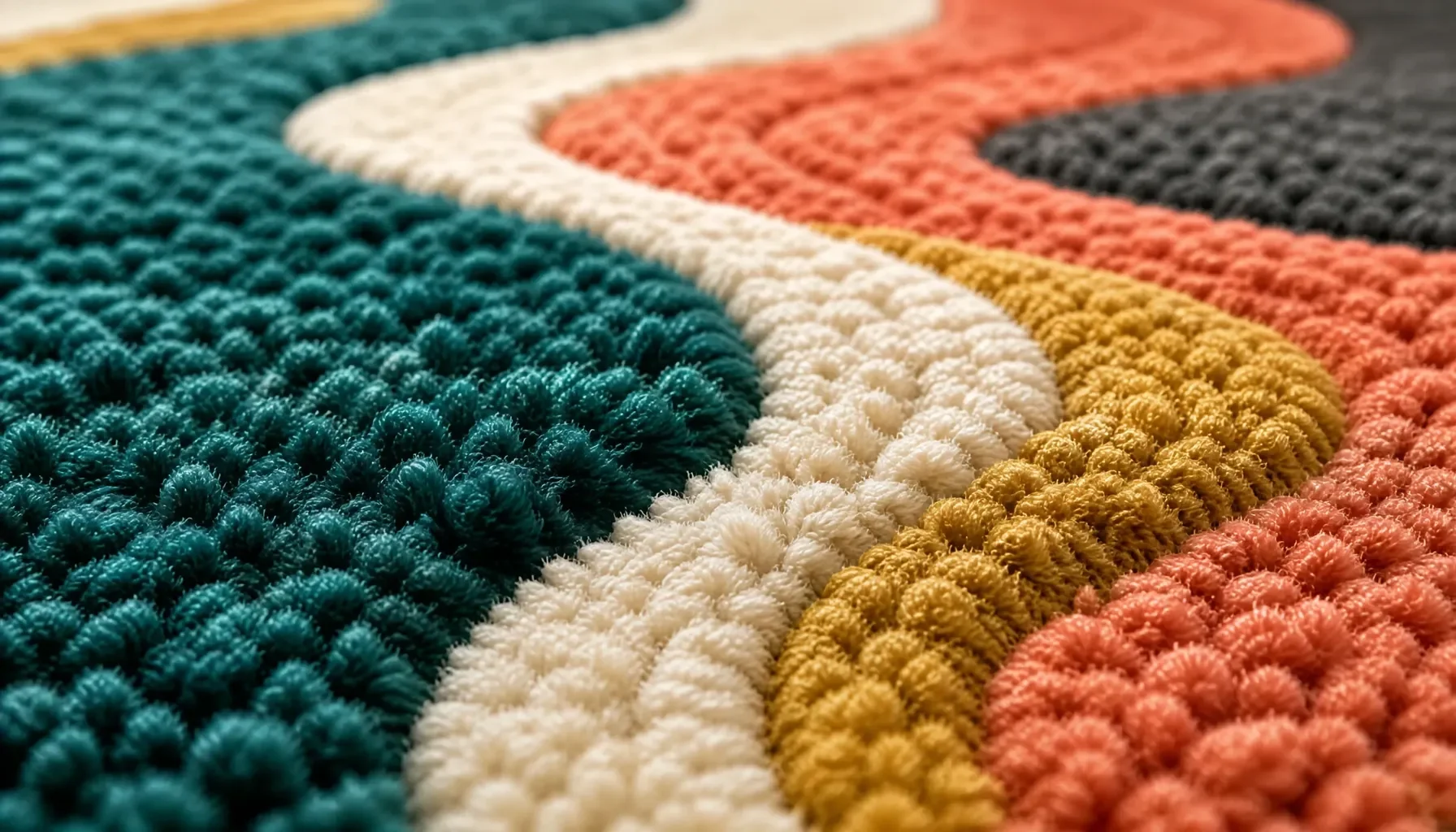
A tufted rug is made by inserting yarn into a backing to form a pile, creating a raised, tactile surface. Compared with a flat printed image, that texture can make the rug feel more substantial underfoot and give the design a crafted appearance. The supplied information identifies handmade tufting as a preferred direction, particularly for custom designs.
However, “tufted” does not specify the fiber, density, finishing quality or expected lifespan. Those details need to come from the maker. Ask what yarn is used, how the backing is secured, how the edges are finished and what care the piece requires. A seller who can explain these points clearly gives you more to evaluate than one relying on the word “premium.” For a high-use area, construction and maintenance may matter more than the design’s novelty.
Printed rugs may suit different priorities
A printed rug can be a sensible choice when a buyer values a specific image, a flatter surface or a design that is difficult to translate into yarn shapes. The supplied material does not provide comparative prices, durability tests or performance data for printed products, so it would be inaccurate to claim that every tufted rug lasts longer or that every printed rug is lower quality.
Instead, compare products on the same terms. Check whether the image is sharp, whether the rug’s dimensions suit the room, and whether the seller explains its materials and care. Ask how the design will be adapted to the final shape: complex outlines, small facial details and multiple colors may be simplified in a handmade version. The right option is the one whose finish matches your use and expectations, not simply the one described as more artisanal.
How to judge the $150–$450 range
The stated $150–$450 range is a starting point for a quality custom piece, not a promise that a particular size or design will fall within it. Size and pattern complexity are explicitly identified as cost factors. A detailed character portrait may require more design work than a simple emblem, while a larger rug uses more material and takes more production effort.
Before ordering, ask for an itemized explanation of what affects the quote. Confirm the final dimensions, proposed colors, material, backing and whether design revisions are included. If a quote is far below your expectations, do not assume it is a bargain until you understand the specification. Likewise, a high quote is not proof of superior workmanship. Compare samples or finished-product photographs where available, and ask the seller to show close-ups of edges and surface detail.
Designing a custom anime rug that works in your room
A successful custom rug starts with a design that can be produced clearly at the intended size. Buyers should settle the placement, artwork direction and material questions before approving production, especially when adapting a detailed anime image.
How to design your own anime rug for a bedroom
Start by measuring the space and deciding what the rug needs to do. A piece beside a bed serves a different purpose from a central floor feature or a compact accent near a desk. Then choose a design with a clear silhouette and a limited number of important visual elements. The more intricate the artwork, the more important it is to discuss how the maker will translate it into yarn and color blocks.
A useful design brief includes:
- The intended room and placement.
- Approximate dimensions and preferred shape.
- The series or visual reference, with the specific motif you want.
- A color palette that works with the room.
- Any details that must remain legible at the finished size.
- Questions about materials, backing, care and production revisions.
Request a digital mock-up or other clear design confirmation before work begins. The seller should explain which details may need simplifying; do not assume that a screen image will reproduce exactly as a textured rug.
Make the design fit the room, not just the fandom
A rug is a large visual surface. If the room already contains bright lighting, colorful peripherals, posters or patterned bedding, a highly detailed design can compete for attention. A more restrained motif or limited palette may integrate more easily. In a neutral room, the rug can carry more of the visual weight.
Think about how the piece will look from the doorway and from the position where you spend the most time. In a gaming room, sit at the desk and consider what will appear in the camera frame. In a bedroom, check whether furniture will obscure the central image. For a “customized One Piece rug for home decor,” for example, the decision is not simply which character or symbol to choose; it is whether that image’s shape and colors work at the intended scale.
Check design rights and seller transparency
Custom artwork based on anime characters raises intellectual-property questions. The supplied market information does not explain licensing practices or establish what a particular seller is authorized to produce. Buyers should not assume that a custom order is officially licensed just because it references a well-known series.
Ask the seller whether the design is original, licensed or based on customer-supplied artwork, and read the shop’s terms before commissioning it. Avoid using another artist’s work without permission. This protects creators and helps prevent misunderstandings about what the seller can make, display or reproduce. More broadly, a trustworthy maker should be able to explain the design process and provide clear expectations about the final product.
What shoppers and makers should do as the category develops
The market’s direction creates opportunities for buyers who want distinctive decor and makers who can deliver customization. But search interest alone does not establish durable demand. A thoughtful purchase or business decision should be based on product quality, customer fit and transparent evidence.
A buyer’s checklist before placing an order
Use the following questions to compare sellers and avoid making a decision based only on a striking product photo:
- What is the finished size and shape? Confirm measurements in writing.
- What fibers and backing are used? Ask for specific material information rather than broad quality claims.
- How will the artwork be translated? Confirm which small details, colors or outlines may change.
- Can you review the design before production? Establish what approval or revision process is available.
- How should the rug be cared for? Request instructions appropriate to the stated materials.
- What does the quote include? Clarify design work, shipping and any other stated costs before paying.
These questions are more useful than relying on a generic “best” list. For further practical guidance, binteez.com can be considered as one resource for evaluating custom decor choices; whatever the source, verify the maker’s materials, examples and terms directly before committing.
How makers can build trust in a niche category
For rug makers, customization is a differentiator only when customers can understand what they are buying. Clear product photos, accurate dimensions, material details and honest explanations of design limitations can reduce uncertainty. The $150–$450 range supplied for quality custom rugs offers a broad planning reference, but it should not be treated as a recommended price for every maker or specification.
Makers should also distinguish original artwork from licensed designs and state how customer-provided references are handled. A detailed image may attract attention, but customers also need confidence in the finishing and practical use of the rug. Showing close-up details of edges, texture and backing can make a listing more informative. These are general trust-building measures, not proof that demand will grow at a particular rate.
What the Q3–Q4 forecast does—and does not—mean
The supplied forecast identifies Q3 and Q4 of 2024 as a likely peak, linked to holiday shopping and new anime seasons. This is a prediction, not a verified report of what ultimately happened. For a time-sensitive decision in 2026, readers should seek current platform data and seller information rather than treating a 2024 forecast as present-day evidence.
The underlying seasonal logic remains relevant as a planning idea: gift-shopping periods and major entertainment releases can bring attention to related merchandise. But sellers should avoid overproducing on the strength of a forecast alone, and buyers should not assume that a popular release guarantees better availability or lower prices. The stronger takeaway is to plan around the product’s actual production time, confirm order details early and assess current demand with dated, traceable evidence.
FAQ
Is custom anime rugs market growth 2024 supported by verified sales data?
The supplied figures indicate a 15–20% year-over-year increase in searches and a $150–$450 price range for quality custom rugs, but they do not include a named dataset, methodology or audited sales total. Search activity is not the same as purchases or revenue. Treat the numbers as directional market context, not conclusive proof of category growth. For current decisions, look for dated platform reports or transparent sales data.
What should I expect to pay for a handmade tufted anime rug?
The provided reference range is $150–$450 for a quality custom rug, with size and design complexity affecting the quote. It is not a fixed price list, and the information does not specify standard dimensions or materials. Ask the maker for a written specification covering size, fiber, backing, finishing and design approval. Comparing those details is more meaningful than comparing headline prices alone.
Is a tufted anime rug better than a printed rug?
Neither format is automatically better for every buyer. The supplied information describes growing preference for handmade tufted rugs, which offer a raised, tactile surface, but it does not provide controlled durability comparisons against printed products. Choose based on your priorities: texture, artwork detail, customization, room placement and care requirements. Ask sellers about actual materials and construction, and review close-up examples before ordering.
How can I design a custom anime rug for a bedroom?
Measure the intended space, choose a design that remains legible at the finished size, and select colors that suit the room. Tell the maker whether the rug will sit beside a bed, under furniture or near a desk. Ask how detailed artwork will be adapted to tufting and request a design confirmation before production. Also clarify materials, care instructions, price and whether the artwork is licensed or otherwise authorized.
